
You've driven past it. Maybe you honked at it.
Patan Dhoka once decided who entered the royal city of Yala. Today it is the roundabout your taxi can't escape. Most visitors never learn the difference.
I was born in Lalitpur. I know this gate, and I know its traffic. Let me show you what you've been missing.
See the Change Yourself
[Insert Before & After Interactive Slider: Patan Dhoka Pre-1934 vs. Today]
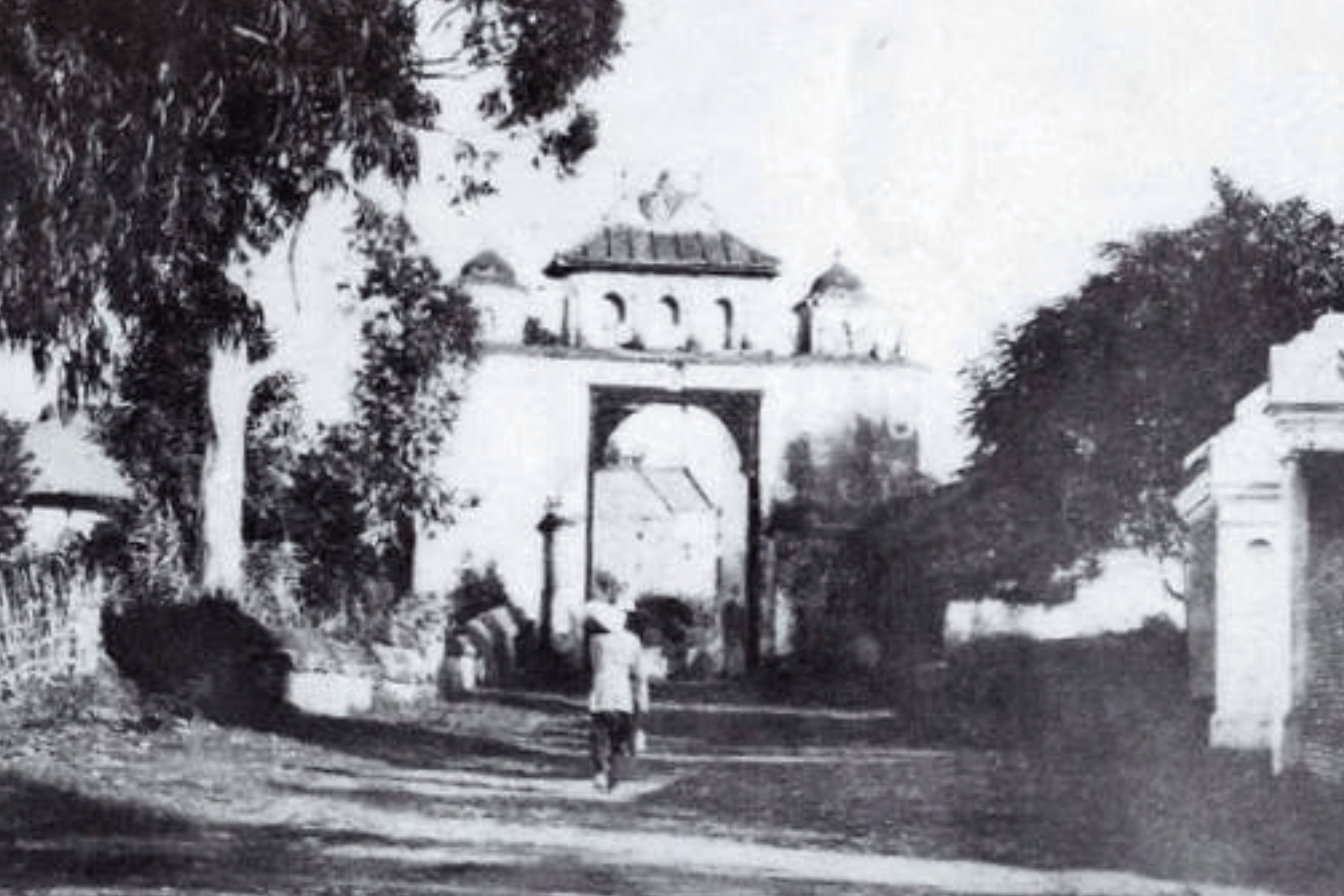
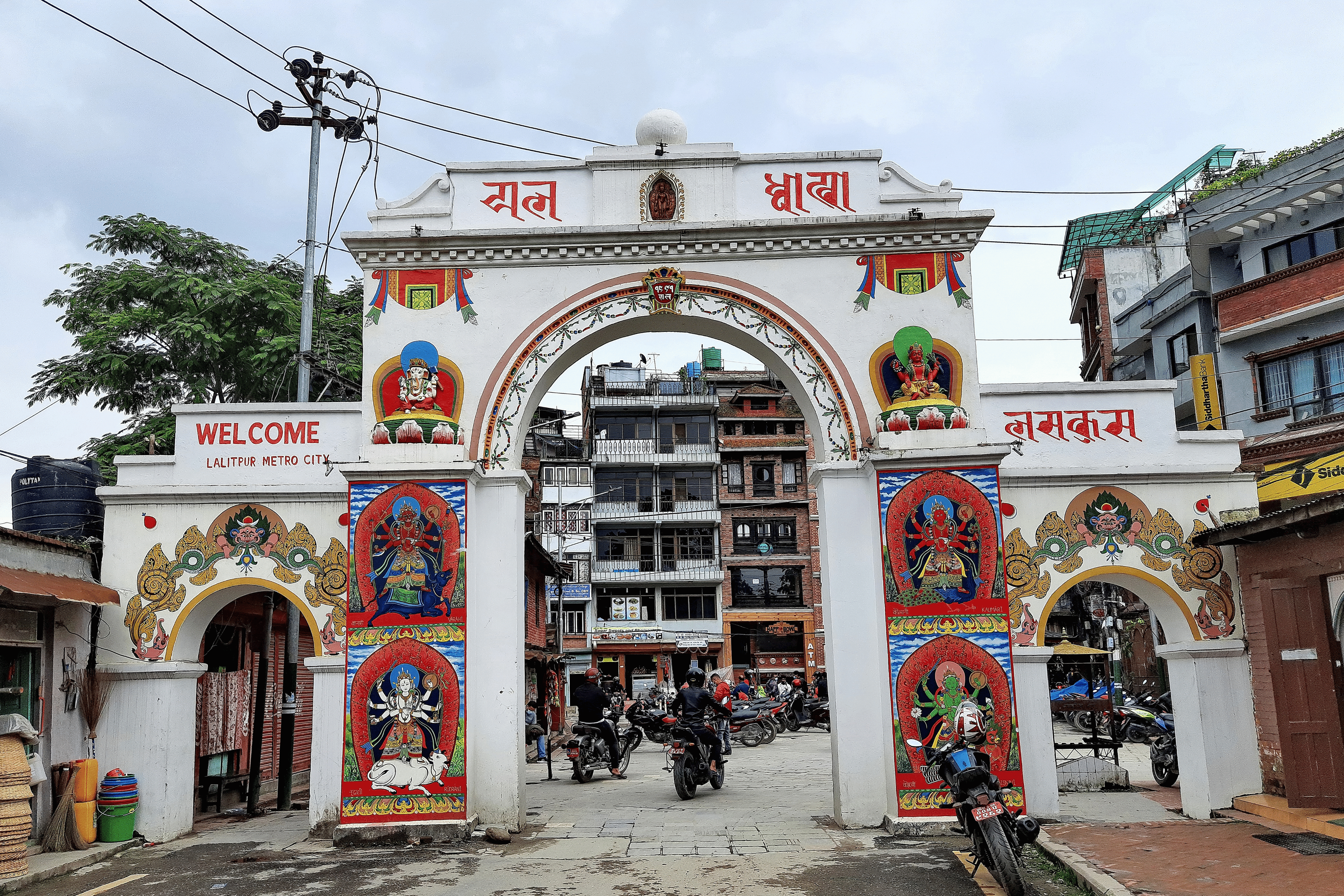
What you're looking at: On the left is the gate before the 1934 earthquake. You see the old brick structure and the timber work, with a few people passing through. On the right is the same spot today. Motorbikes, buses and wires fill the frame. Drag the slider and watch the city grow over the gate.
The Fortified City of Yala
Long before Lalitpur had a ring road, it had walls.
During the Malla period, Patan was a walled city. Its name then was Yala. Gates guarded every approach. Records and local tradition count 21 of them.
Patan Dhoka was the main threshold. Locals also call it Tahdhwaka. Merchants, pilgrims and officials all passed through it on the way to the royal palace.
A gate like this did real work. It controlled who came in. It protected the city. It also marked a line between the outside world and Yala's sacred, ordered streets.
Take a look at the old plan of the city below. The walls form a tight shape around the core. Dhoka means gate in Nepali, so every "Dhoka" you hear in Patan was once a door in that wall.
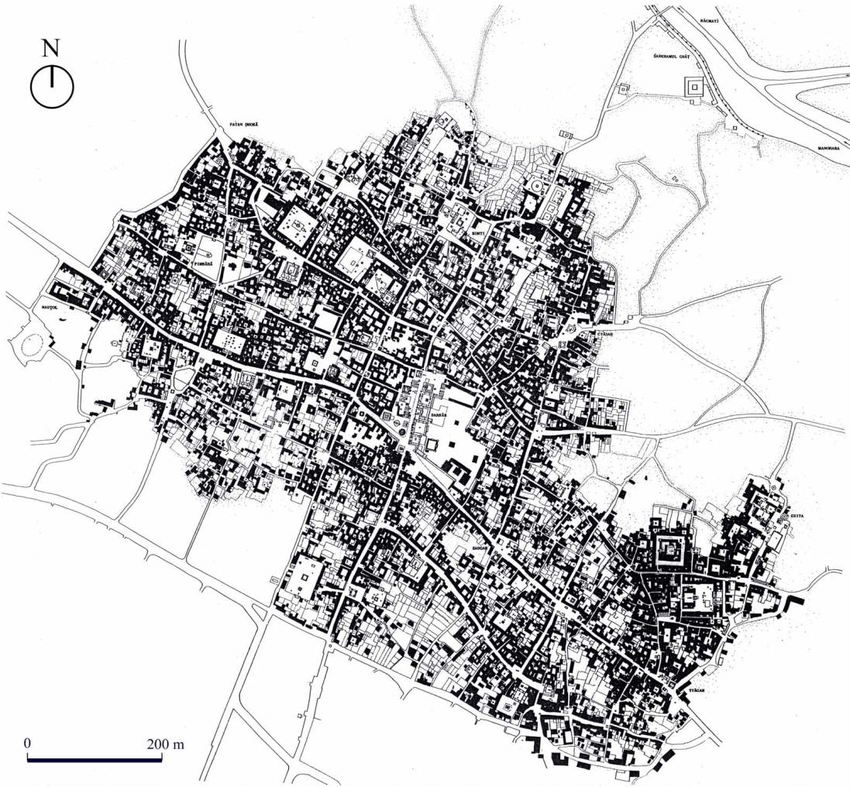
Source: Kathmandu Valley Preservation Trust (KVPT). Map accessed via ResearchGate
Rebirth and Art
In 1934, a massive earthquake struck Nepal. It hit the Valley hard. Patan Dhoka did not survive in its old form.
The gate was rebuilt. The walls had already faded from daily life, but the gate stayed. It still stands as the main entry to the old city.
Look closely and you'll see why locals still stop here. The gate is not just a landmark. It is a shrine.
The paintings are by Lok Chitrakar. They show the Eight Mother Goddesses, the Ashta Matrika. In the Newar tradition, these goddesses protect the city. Their place at the gate is no accident. They guard the threshold, as the old walls once did.
You'll also find images of Bungadyah, Ganesa and Kumara. Bungadyah is the deity many Patan families know from the great Rato Machhindranath chariot festival. Ganesa is honored at the start of any journey. Kumara is a protective presence.
Next time you're in the traffic, look up. People still stop to offer prayers here, even with the horns blaring.
Local tip: Come early in the morning. The roundabout is calmer, and you can see the paintings without a bus in your way.
Where to Stay Beyond the Gate
Most visitors sleep in Kathmandu and make a quick day trip to Patan. That's a mistake.
Stay inside Patan and you wake up to temple bells. You walk to the squares before the tour buses arrive. You eat where families eat.
Here are four heritage stays you can book on Expedia. Each one gives you Newari character and an easy walk to the historic squares. Check current availability and rates before you plan.
Traditional Homes - Swotha
This is a restored home in the Newari style. Expect carved wooden windows, brick and a courtyard feel. It suits travelers who want to stay inside a real piece of Patan's building tradition.
The Inn Patan
A heritage-style stay close to the old core. It works well if you want traditional design with a short walk to the main squares.
Hotel Patan House
A traditional setting in the heart of the old city. It's a good fit if you want local atmosphere and quick access to Patan's temples and lanes.
Hotel Timila
Another option near the historic squares. It is a good base if you want to explore on foot and return to the same quiet streets at night.
Why this matters: A generic hotel gives you a bed. A heritage stay gives you the city. In Patan, the building itself is part of the story.
Get the Real Story, Every Time You Travel
Patan changes fast. Roads close. Festivals shift. A route that worked last year may not work now.